
22 Oct 2026 / Criollo Horse Riding in Argentina: Ride Like a Gaucho
At Estancia Don Joaquín, a horse-riding holiday is also an introduction to Argentine country life. Here in Esquina, Corrientes, riding brings you closer to the horses, the landscape and the people who work with them.
Our guests learn the Argentine Criollo riding style, known in Spanish as monta criolla. Whether you are new to riding or arriving with years of experience, it offers another way to understand the relationship between horse and rider.
In this journal, Angie Solanet, owner and host of Estancia Don Joaquín, shares her knowledge of Criollo horse riding in Argentina and the traditions that make it such a distinctive experience. Angie has been welcoming and guiding guests alongside her husband, Diego, for over 20 years and has a deep understanding and connection with the Criollo
What is Criollo horse riding?
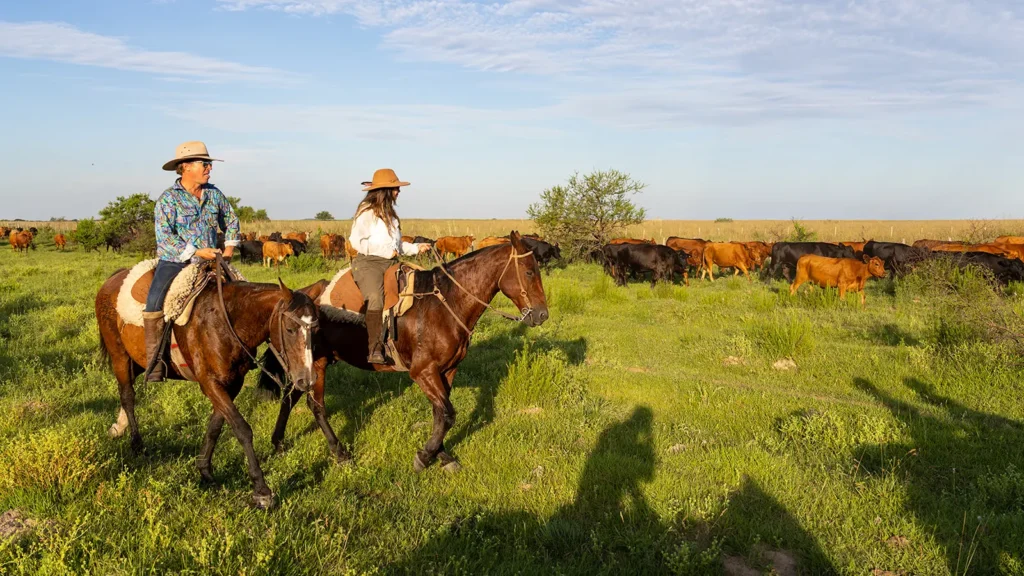 Angie: Criollo horse riding is the traditional Argentine approach associated with gauchos and rural work. At Estancia Don Joaquín, it combines traditional saddles with gentle neck-reining cues.
“Criollo” can refer to a horse as well as a riding tradition. A Criollo horse and the Criollo horse riding style are related subjects, but the breed name does not describe a complete riding technique.
How do you steer the horse?
Angie: At the estancia, we introduce guests to neck reining, which means using a rein against the horse’s neck to communicate direction. Our guides show you how to use these cues with your assigned horse before setting off.
How should you hold the reins?
Angie: In the Criollo style we teach at Estancia Don Joaquín, you keep both reins even and relaxed, with a little slack: neither too long nor too short. This helps you avoid maintaining constant contact with the horse’s mouth.
How do you ask the horse to stop or move forward?
Angie: To ask your horse to move forward, use your legs lightly and make sure you are not pulling on the horse’s mouth. To ask your horse to stop, gently bring both reins back, then release the pressure once the horse responds.
How does this differ from English riding?
Angie: If you are accustomed to English riding, you will need to adapt the way you use the reins. We use heavier traditional bits, so you should not maintain the steady rein contact you may be used to in English riding. Keep your hands gentle and your reins relaxed. Our gauchos and guides will demonstrate the cues for your horse before you set off.
Getting comfortable before your ride
Before heading out, take time to become familiar with the reins, the saddle and your horse’s responses. Ask questions, practise the movements and let your confidence develop gradually.
What is a recado de bastos?
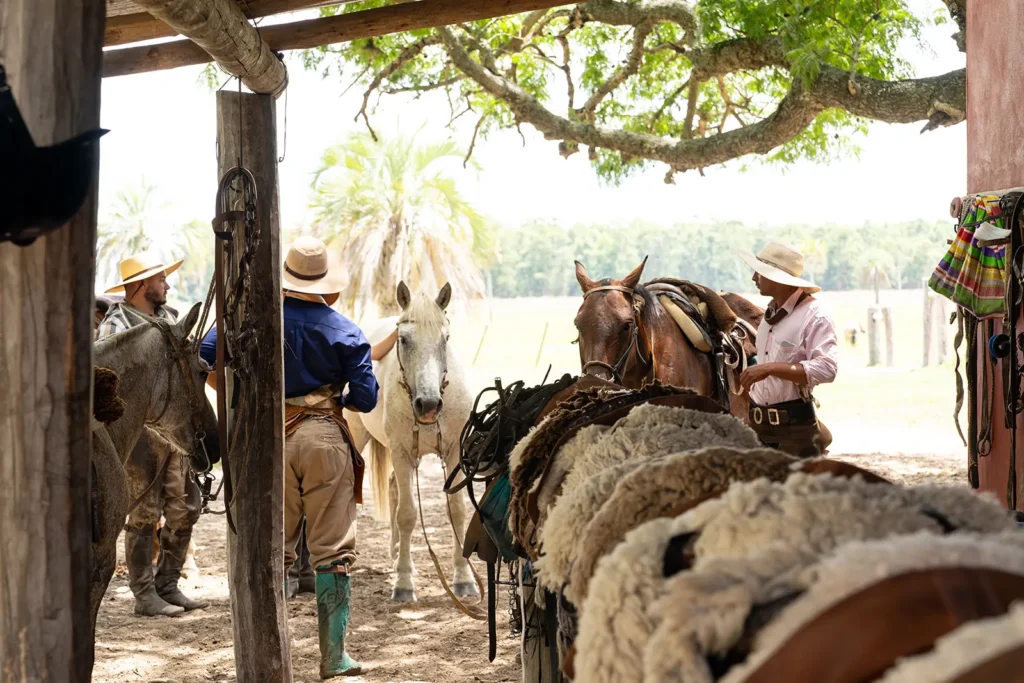
Angie: A recado de bastos is a traditional Argentine saddle arrangement. At our estancia, we use recados de bastos and Corrientes-style saddles, with a sheepskin covering called a cojinillo.
Discovering traditional Argentine tack
The equipment is part of the experience. Seeing the tack up close gives unfamiliar Spanish words a practical meaning: you can recognise the different pieces, ask how they are used and appreciate the care involved in preparing a horse.
What is the Argentine Criollo horse?
Angie: The Argentine Criollo descends from horses brought to the Americas by the Spanish in the 16th century. Many roamed freely across what is now Argentina, adapting to the landscape and becoming part of Indigenous peoples’ lives. Emilio Solanet later helped preserve the breed and develop its standard, which was approved in 1922.
Today, the Criollo is an emblematic Argentine breed, known for its strength, endurance and adaptability. Our estancia horses are forward-going, with independent minds and calm temperaments.
Our own Criollo herd
At Estancia Don Joaquín, we take great care when selecting our horses. We also breed Criollos and have our own Criollo herd.
How do our horses live, and what is their temperament like?
Angie: At Estancia Don Joaquín, our horses live outdoors in the fields rather than in individual stable boxes. The countryside is their home, and they are familiar with the different environments they encounter on our rides.
Horses accustomed to the countryside
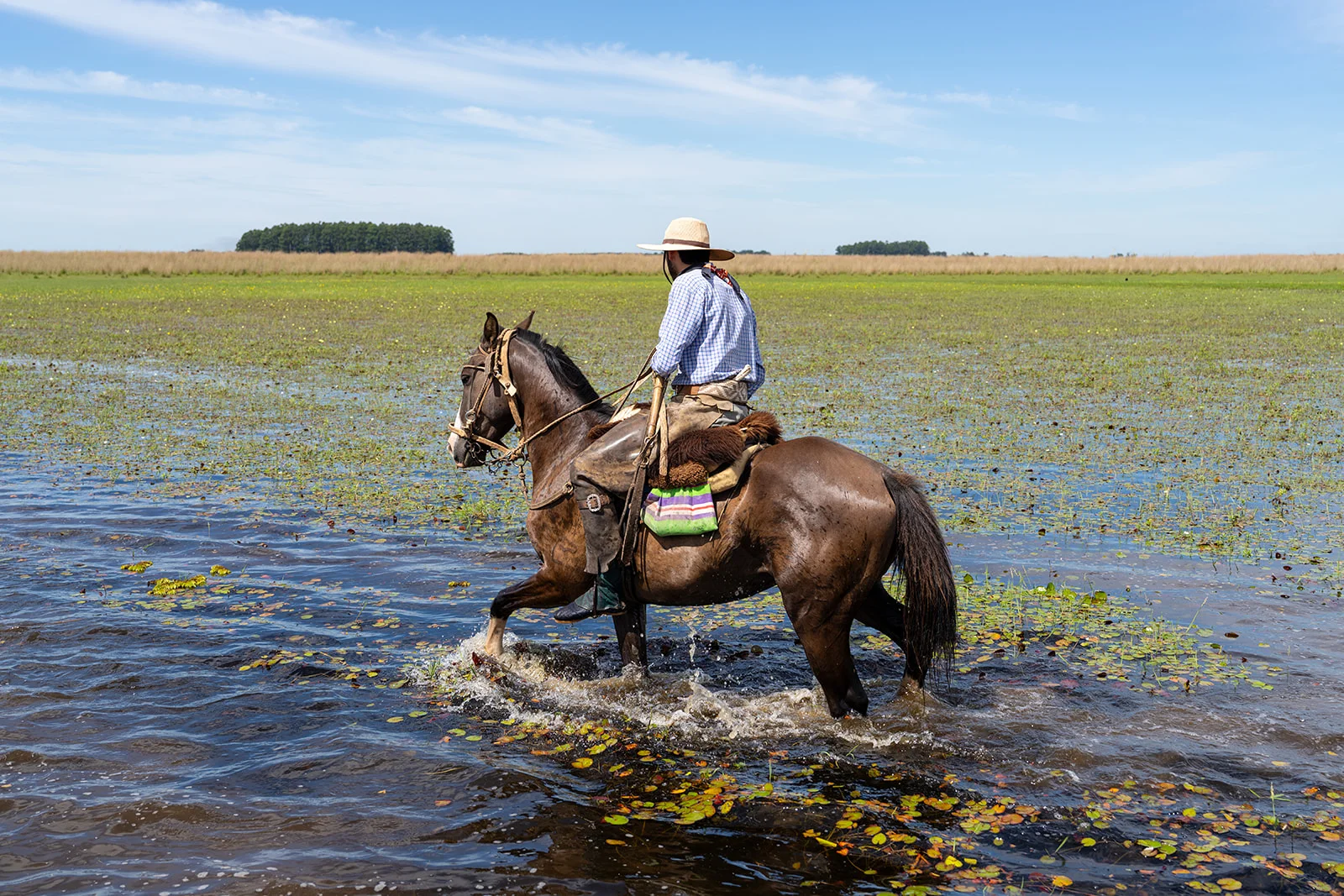
Our horses are brave and accustomed to all kinds of terrain, including wetlands. They are also familiar with other horses, cattle and local wildlife. These are everyday parts of their surroundings rather than unusual sights or encounters, helping them remain relaxed as we explore the countryside together.
Our riding horses include both Criollos and crossbred horses. We get to know each one individually and match every guest with a horse suited to their riding experience and confidence.
Can beginners learn the Criollo riding style?
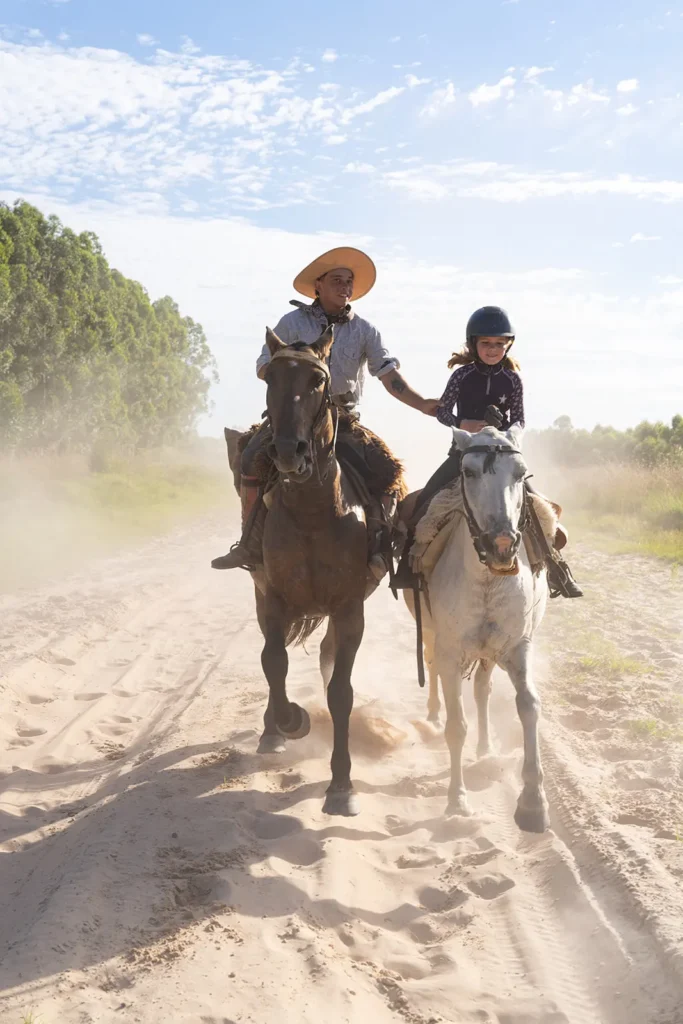
Angie: Yes. Our estancia welcomes beginners and experienced riders, and we select horses according to each guest’s experience and confidence. We also organise groups according to riding level and preferences.
You do not need to arrive already knowing the Argentine style. Tell us about your riding background when you contact us to plan your stay, including anything you would like help with.
Does every gaucho ride the same way?
Angie: One of the interesting things about Argentine country riding is the freedom of personal style. Each gaucho rides in their own way. The emphasis is on staying balanced and secure, communicating with the horse and getting the work done, rather than following one rigid posture. Riders do not necessarily sit as upright as you might expect in a formal riding lesson.
A practical approach to riding
This practical approach makes sense when you consider the horse’s role on a working estancia. Riding is part of everyday life, and the way a gaucho sits and handles a horse reflects the work they do together.
Why learn with gauchos?
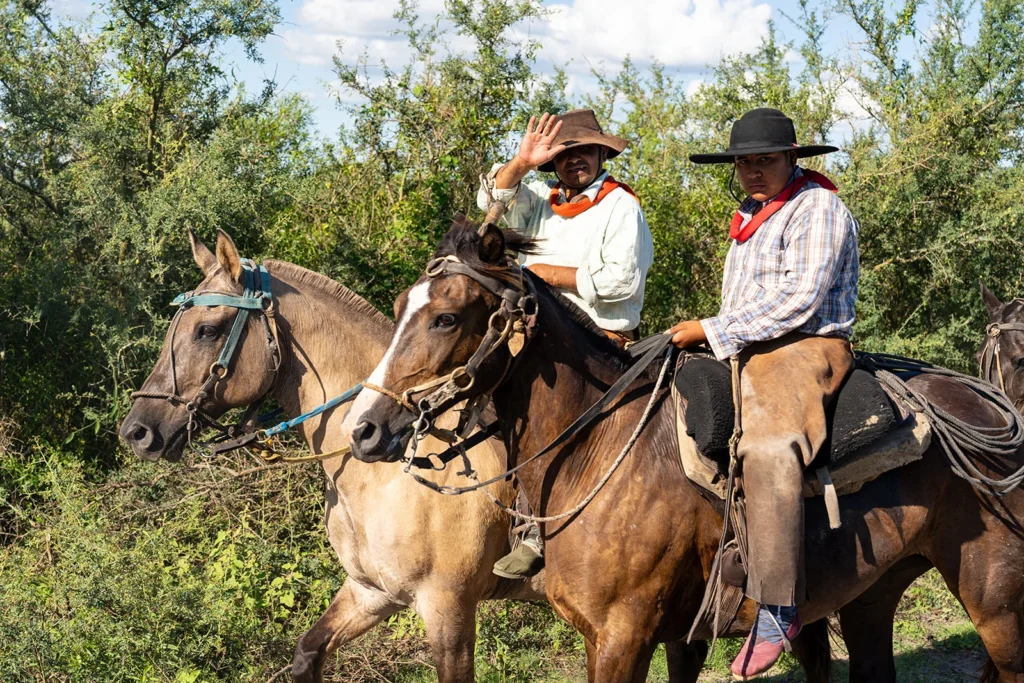
Angie: Riding alongside local gauchos gives you an authentic experience of life on a cattle ranch in Argentina.
We are proud to have two Argentine gauchos who also speak English, giving international guests the opportunity to communicate directly with them, ask questions and hear their stories. Our gauchos accompany all our rides, allowing guests to discover their culture and way of life while learning about the Criollo horse riding style.
Sharing life on the estancia
Between rides, there is time to ask questions, share stories and enjoy the hospitality of our family home. These moments help turn a riding trip into a personal connection with Argentina.
Frequently Asked Questions
Is Criollo horse riding the same as Western riding?
Angie: There are similarities, including neck reining, but Criollo riding has its own Argentine traditions and equipment.
Do I need previous experience?
Angie: No. Beginners can learn at the estancia, while experienced riders receive an introduction to our riding style. We personalise every ride according to our guests’ riding abilities and match each person with a suitable horse from our herd of 150.
Do you see the Criollo horses as pets?
Angie: We love and respect our horses at the estancia, allowing them to live freely in the fields and roam as a herd. They are our companions and help the gauchos with daily ranch work, such as moving cattle into handling chutes, lassoing and driving herds over long distances. However, we do not treat them like pets. They are working horses, with an important role in the life of the estancia.
Experience Criollo horse riding at Estancia Don Joaquín
Angie: You can experience Criollo horse riding all across Argentina. However, if you have the chance to visit us, we warmly invite you to become part of our life here at Estancia Don Joaquín, near Esquina in Corrientes. Where you can experience the Criollo riding style as part of our authentic way of life.
You will see how we work with the cattle, get around the fields and spend time together on horseback. When guests ride with us, we enjoy sharing our everyday life: a conversation with a gaucho, a pause to watch the horses, or the ride home as the light begins to change.
There is time to get to know your horse and find your own way of riding. We welcome you to join us and become part of our culture, our traditions and our home.