
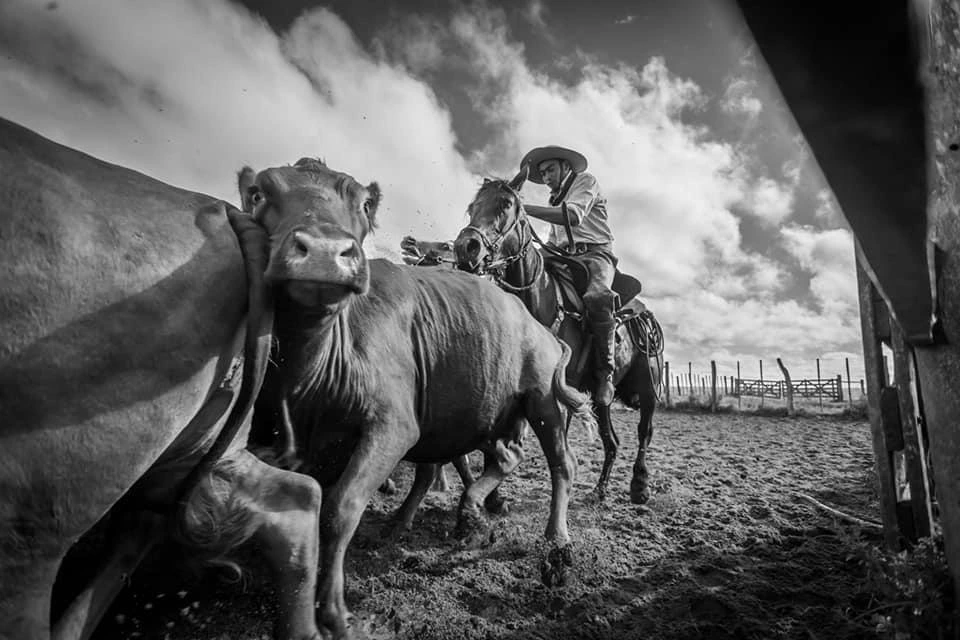
11 Nov 2026 / Cattle Work on an Argentine Horseback Riding Holiday: Riding with Gauchos
From herding cattle across the Corrientes countryside to learning to throw a lasso, discover what it’s really like to work alongside Argentine gauchos on horseback at Estancia Don Joaquín – from a guests perspective.
When I first arrived at Estancia Don Joaquín, I wasn’t quite sure what to expect when it came to working with cattle. I knew it was a working estancia in Argentina, but I wondered how authentic the experience would be and, more importantly, how involved I would actually get to be in it.
Not many places in the world offer the opportunity to work cattle on horseback as part of a riding holiday. Here in Argentina, guests at Estancia Don Joaquín can ride alongside real gauchos, experiencing a way of life that has been passed down through generations.
What I hadn’t realised was just how much a part of everyday life cattle work would become during my stay here.
Horseback Riding in Argentina: My First Taste of Gaucho Life
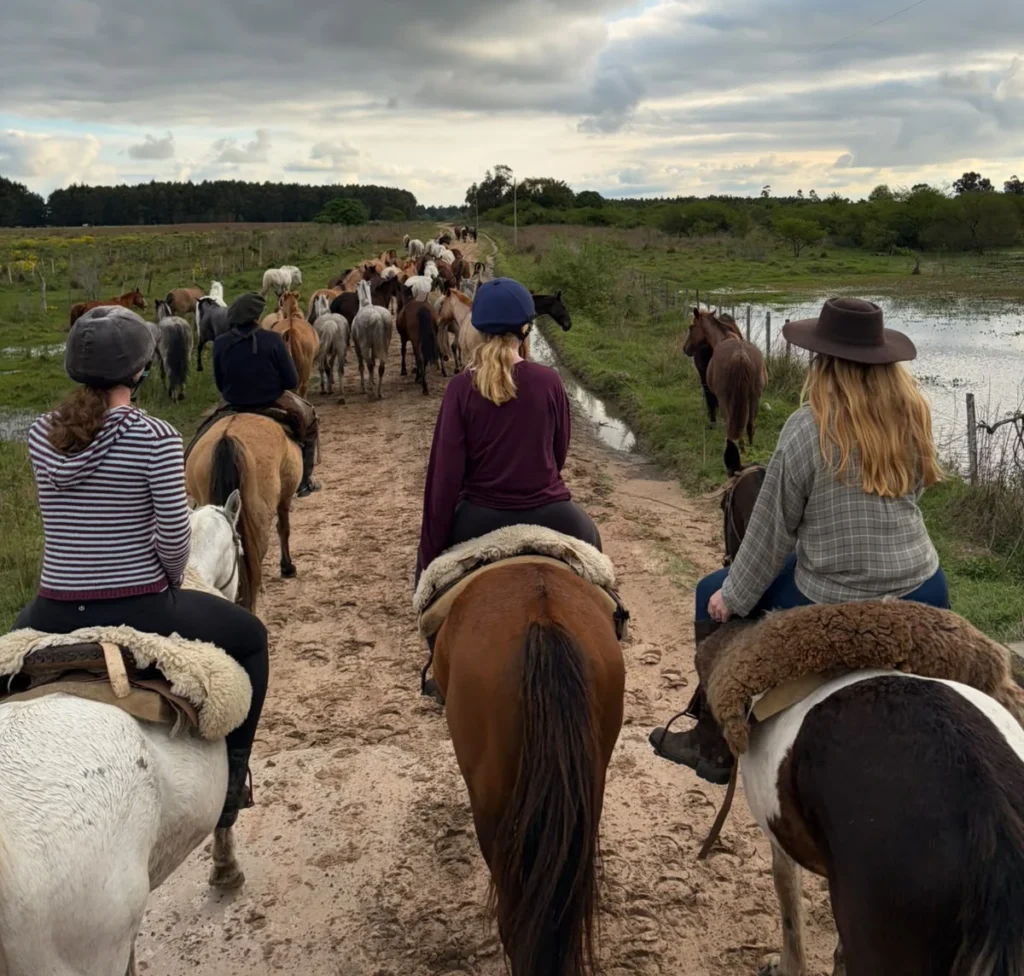
On my very first ride at Don Joaquín, we helped herd horses back to the estancia from their temporary home out in the wetlands.
With a herd of over 150 horses, the estancia regularly rotates its riding horses, giving them plenty of time to rest, roam freely and simply be horses when they’re not doing their jobs as riding companions.
Watching them gallop across the countryside as we brought them home was like something out of a film.
I couldn’t quite believe what I was experiencing, or the speed, skill and horsemanship of the gauchos carrying out their everyday duties.
It was my first real glimpse into what this horseback riding holiday in Argentina was going to be like.
Then came the cattle work.
Cattle Wrangling on Horseback: Part of the Everyday
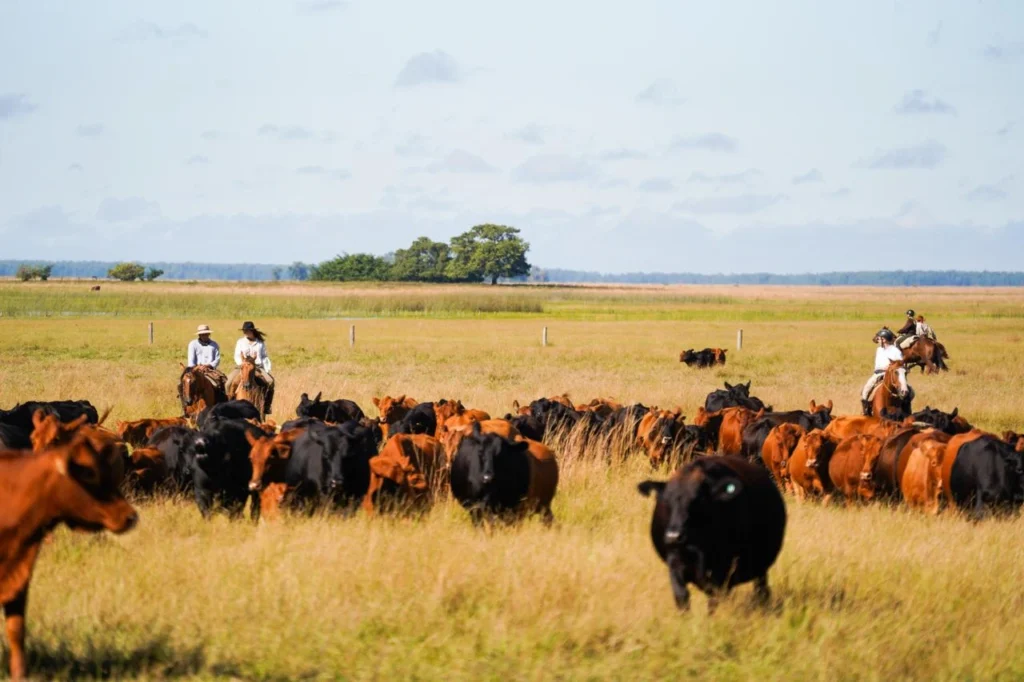
I quickly discovered that staying on a working estancia in Argentina meant cattle work wasn’t simply a scheduled tourist activity. It was part of the daily routine of the gauchos, and guests were invited to join in whenever the opportunity arose.
Within my first few rides, we were heading out into the campo with the gauchos on our first cattle-wrangling mission.
I gradually learnt to recognise the signs that there might be some cattle work ahead. A particularly good clue was when the gauchos appeared with their lassos attached to the backs of their saddles. Although, they will also frequently carry them just in case.
One of the things I love most about Estancia Don Joaquín is that you never quite know what each ride will bring.
Sometimes you’re told in advance that you’ll be helping with the cattle. Other times, Roque, the estancia’s chief gaucho, simply appears on your ride, and you begin to suspect something interesting is about to happen.
Once the work is finished, he has an extraordinary ability to disappear again. One moment he is there, capataz of the gauchos, herding, counting, working. The next, he is a speck on the horizon, on to the next job … or to tend the Asado back at the estancia.
One of my favourite moments during a ride that isn’t to do with cattle work is spotting a lone horseman in the distance, moving at a purposeful walk, swinging his rebenque as his horse carries him across land he knows inside out. More often than not, it’s Roque.
My First Experience Working with Cattle on Horseback
Only a couple of rides after that extraordinary experience herding horses, I found myself heading out into the countryside with more gauchos than usual.
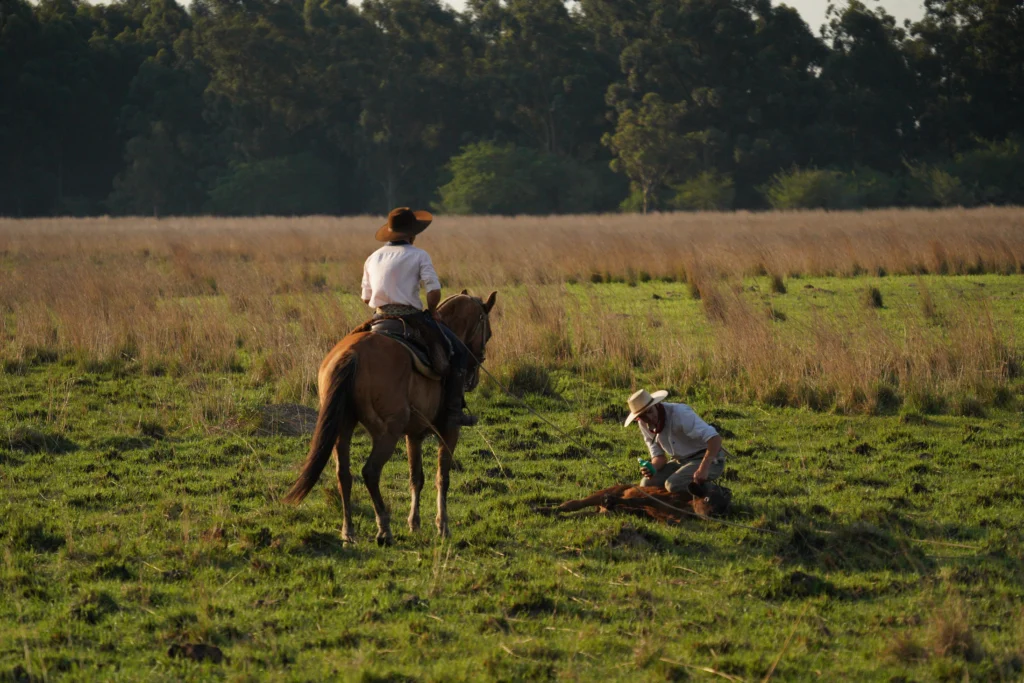
We eventually reached a group of cows and their calves. The calves needed their ears marked with the estancia’s distinctive identification cut, known in Argentina as a señal.
Traditionally, these ear marks have been used to identify which estancia cattle belong to. Today, they exist alongside Argentina’s official livestock identification system, they are compulsory.
A young gaucho had already lassoed and secured one of the calves by the time we got close. It was an impressive feat in itself.
I watched as he took out his knife, sharpened it and expertly made the ear mark in a matter of seconds.
It was something I had never witnessed before, and certainly not something I had expected to experience on a riding holiday.
That moment helped me understand where I was.
This wasn’t a demonstration arranged for visitors. It was real work, carried out by people whose families have been living and working with livestock for generations.
My understanding of the history, traditions and authenticity of the estancia grew considerably that afternoon.
Riding with Roque: The Skills of an Argentine Gaucho
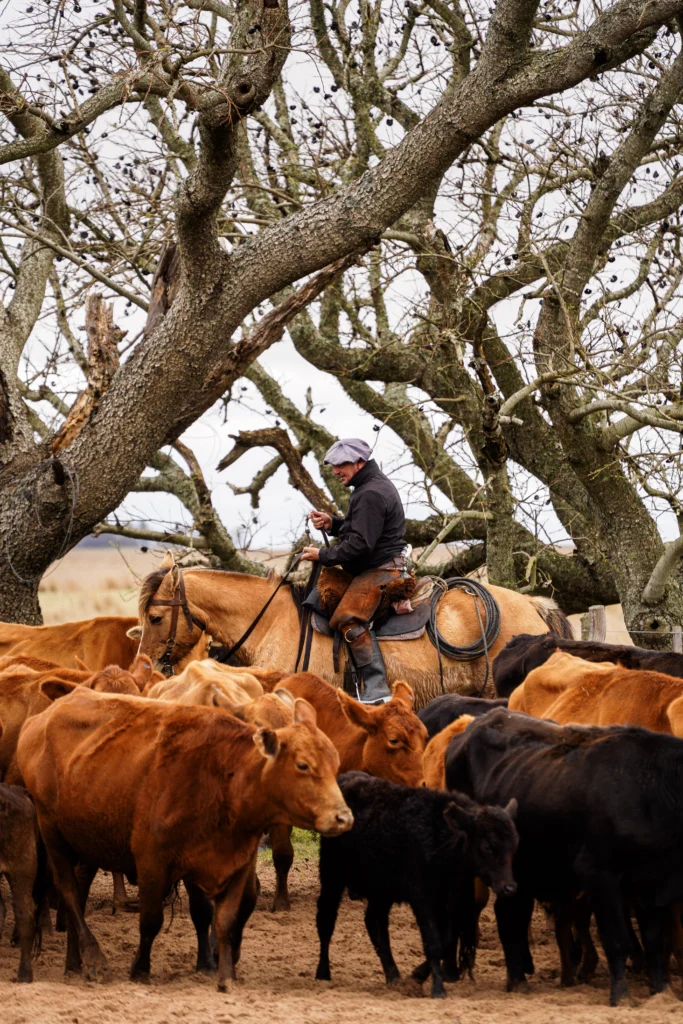
Roque is something of an iconic character at Estancia Don Joaquín.
He has lived and breathed horses and cattle since childhood, learning the skills of the campo from his father.
His knowledge goes far beyond riding and herding. From recognising a sick cow to checking pregnant cattle, caring for newborn calves, branding and identifying young animals, he has spent his life learning how to look after the estancia’s herds.
His attention is almost entirely on the cattle.
A single look or word from Roque, and the other gauchos seem to know exactly which cow to move, which one to lasso and in which direction the herd needs to go.
He’s a little like the godfather of the campo. The lone rider. The man in charge. A defining feature of the estancia and its landscape.
Becoming a capataz, or head gaucho, requires years of experience. A gaucho must understand horses, cattle, fences, pastures and the countless responsibilities involved in running a working estancia. It’s knowledge accumulated over a lifetime, often beginning in childhood. Roque has worked at Don Joaquin since he was 18, under the tutorship of Angie’s father, he has dedicated his entire life to the estancia and its herds.
There is something extraordinary about watching these men at work, particularly when you realise how little they need to communicate verbally.
Herding Cattle and Working in the Corrals
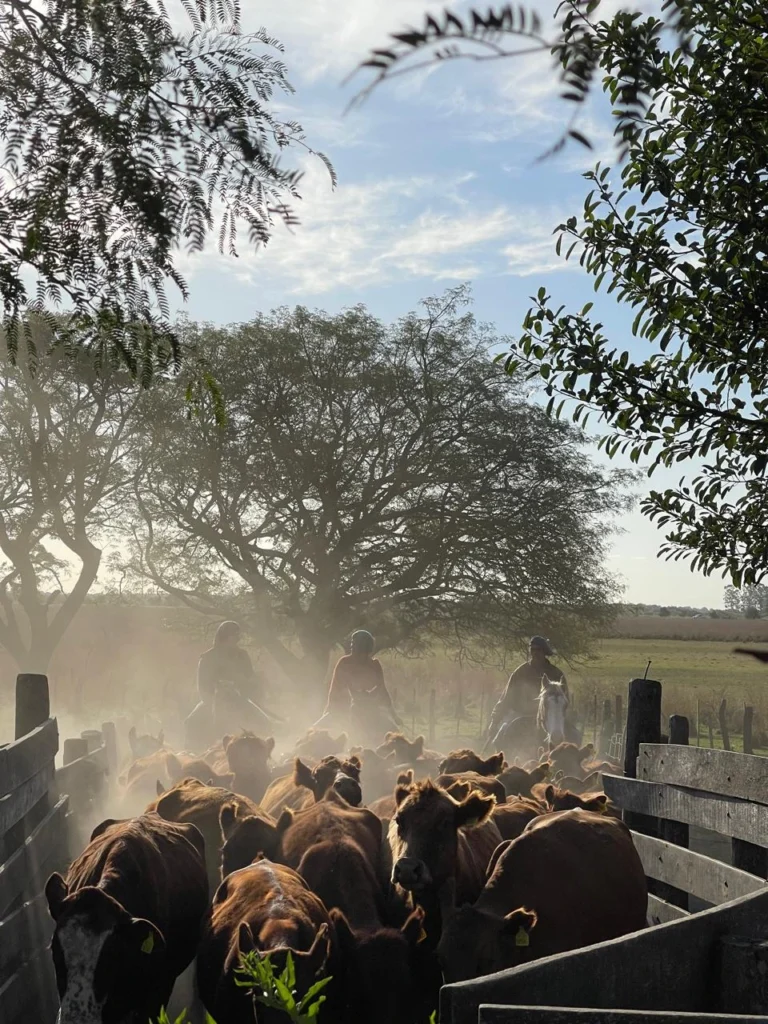
Since that first experience, I’ve been lucky enough to help herd cattle on numerous occasions.
I’ve ridden across vast areas of the ranch to reach corrals far from the main estancia, as well as working in the corral nearby, designed by Angie’s tata (grandfather in rural Argentine areas) Don Pepo.
I’ve helped move herds from one field to another and accompanied the gauchos while cattle were brought into the corrals for different purposes.
Sometimes the work involves separating cattle for market selection. Other times, it’s checking for ticks, illness or pregnancy, identifying animals or preparing them for veterinary treatment.
On some occasions, we’ve remained mounted, working in different fenced sections of the corral, helping separate cattle into groups and encouraging them towards the handling chute, known in Argentina as the manga.
Other times, we’ve watched from behind the fence as the gauchos dismounted, left their horses and began swinging their lassos, sometimes several at once.
It’s an incredible display of skill.
What makes it so impressive is that none of it is for show. Every movement has a practical purpose.
To my delight, one afternoon it was our turn to learn to lasso.
We dismounted, joined the gauchos in the corral and practised our swing and throw on a post – we weren’t quite up to that level yet.
Unsurprisingly, it was considerably harder than they made it look.
Over time, I’ve watched, I’ve participated, I’ve found my voice — surprisingly important when herding cattle, it turns out — and I may even have been genuinely helpful on a few occasions.
At least, I like to think so.
Why Criollo Horses Are So Good at Cattle Work
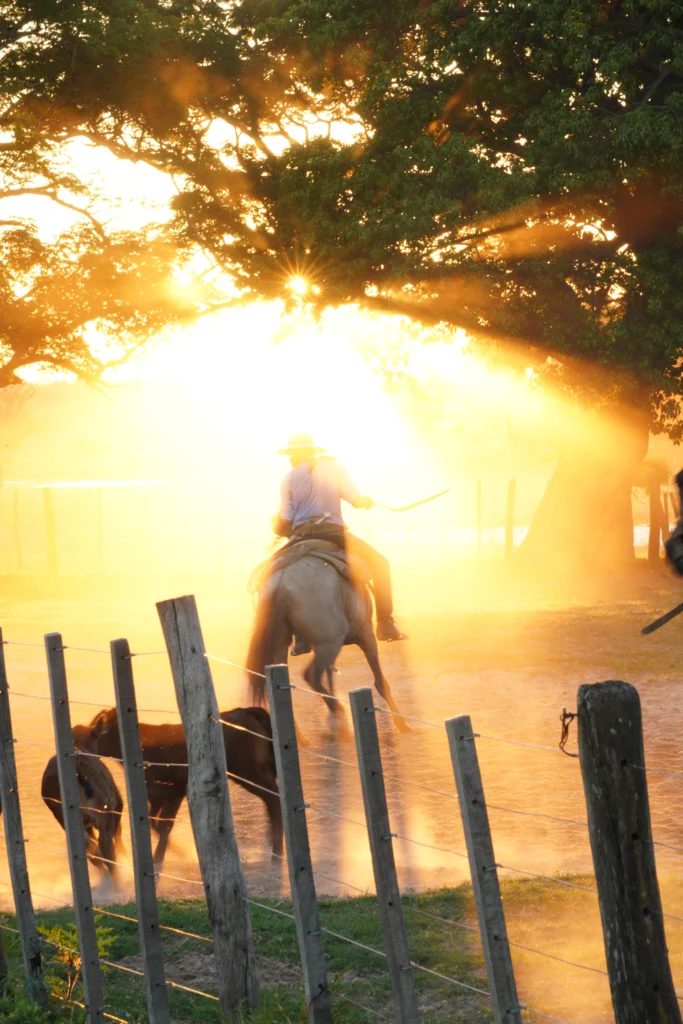
Alongside the extraordinary horsemanship of the gauchos, one of my greatest pleasures has been watching the horses themselves.
They are remarkable.
The Argentine Criollo horse is particularly well suited to working cattle because of its temperament, intelligence, endurance and agility.
These horses need to be calm enough to remain steady around cattle, yet alert and responsive enough to change direction quickly when the work demands it.
They are also trained to stand firm and hold their position when a lassoed animal is secured to the appropriate ring on the saddle.
Watching a horse understand its job, respond to the slightest instruction and work in complete partnership with its rider has given me a whole new appreciation for the breed.
At Estancia Don Joaquín, guests learn the traditional Criollo horse riding style, using subtle neck-reining movements and often riding with one hand, just as the gauchos do when working.
It’s a style of riding that makes complete sense once you’ve watched a gaucho using one hand to guide his horse and the other to manage a lasso.
Why Cattle Work Makes a Horseback Riding Holiday in Argentina So Special
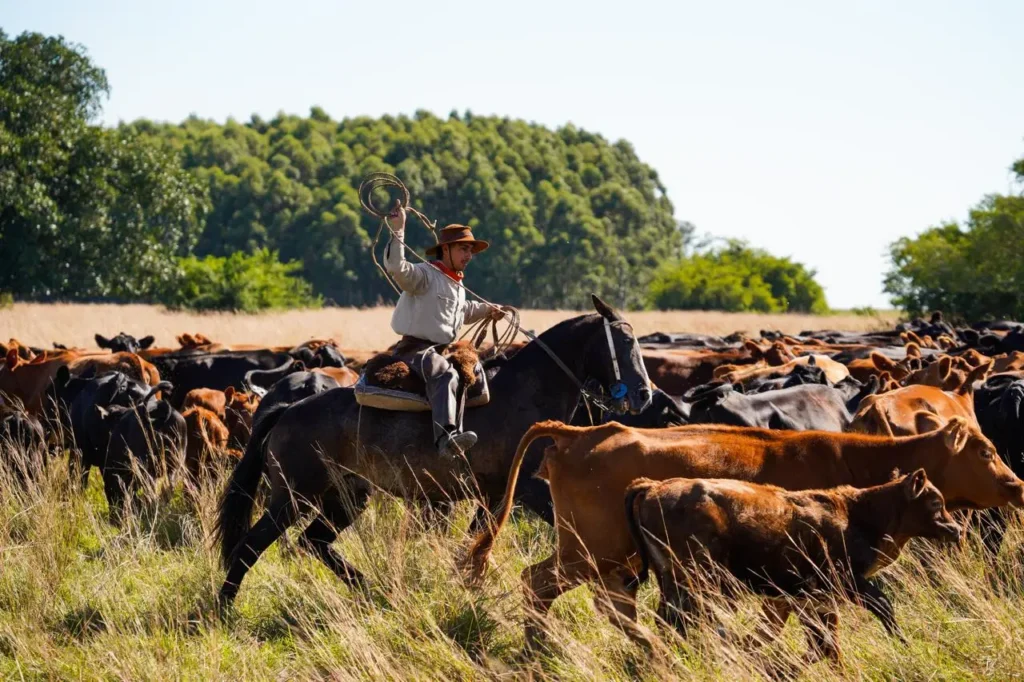
Corrientes has a long history of cattle breeding and is deeply connected to Argentina’s gaucho traditions.
Before arriving at Don Joaquín, I didn’t fully appreciate what that would mean for my riding holiday.
I expected wonderful horses, beautiful countryside and plenty of time in the saddle.
What I found was an opportunity to become involved in something much more interesting.
I’ve crossed enormous stretches of countryside alongside working gauchos, helped move herds, spent time in corrals, attempted to throw a lasso and witnessed skills developed over generations.
I’ve also learnt that there is a great deal more to cattle work than simply moving cows from one field to another.
It requires patience, experience, teamwork, an extraordinary understanding of animals and, as I discovered, a reasonably loud voice.
For anyone considering horseback riding in Argentina, this is what makes staying on a genuine working estancia so different from an ordinary riding holiday.
You aren’t just riding through the countryside. You’re sharing in the everyday life of the people who live and work there.
For me, that has been something I will never forget.
If you’d like to experience riding alongside Argentine gauchos and discover life on a working cattle estancia for yourself, contact Estancia Don Joaquín to find out more about planning your stay in Corrientes, Argentina.
Written by Bella Ruddick,
Guest, Equestrian and Writer