
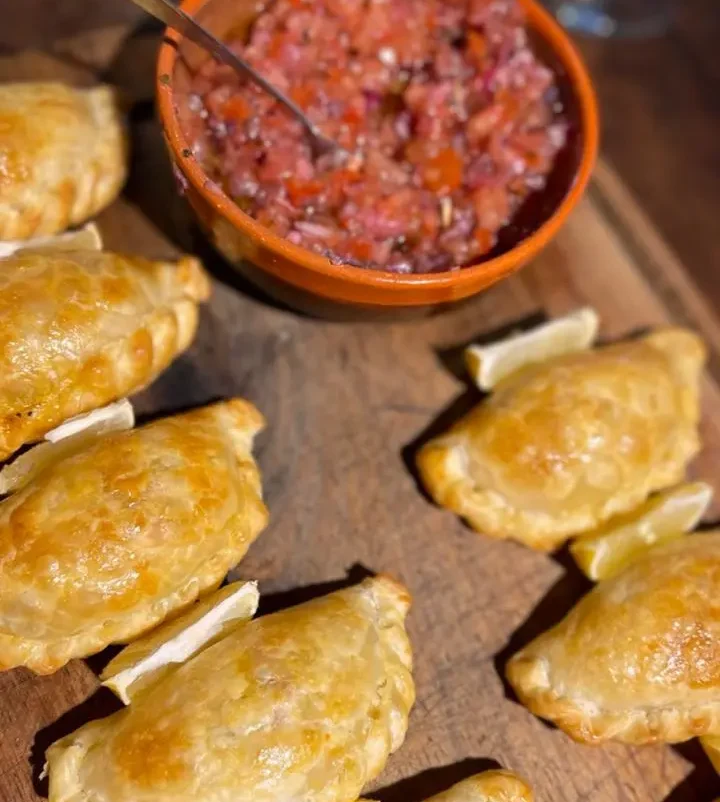
15 Oct 2026 / How to Cook Argentine Empanadas: A Family Tradition at Estancia Don Joaquín
Learning how to cook Argentine empanadas is about much more than following a recipe. In Argentina, empanadas are part of our family gatherings, celebrations and everyday life, with recipes and techniques passed down from one generation to the next.
When you visit us at Estancia Don Joaquín for a horse riding holiday in Argentina, we want you to experience much more than our wonderful horses and countryside. We love sharing our culture, traditions and the simple pleasures of Argentine life.
Food is a very important part of that experience. Every meal prepared in our estancia kitchen is made with care, and one of our favourite activities is inviting guests to join us in preparing traditional Argentine empanadas.
Our cooking classes are led by Angie and Josefina Solanet, the mother-and-daughter team who, together with Diego, welcome guests to Estancia Don Joaquín.
In today’s Journal, Angie shares the story behind her grandmother’s empanada recipe, explains how to make traditional Argentine beef empanadas from scratch and tells us why cooking together has always meant so much to her.
Empanadas Are About More Than Cooking — Angie Solanet
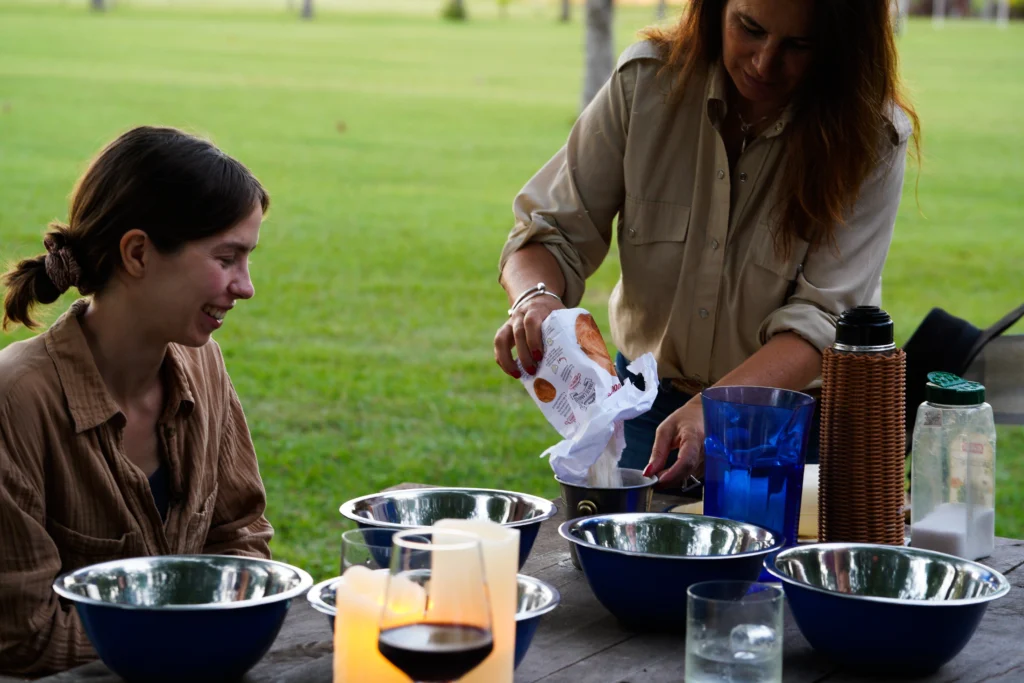
For me, making empanadas has never been just about cooking.
It is about sharing. It is about family. And, perhaps most importantly, it is about something we sometimes find increasingly difficult in our busy lives: simply being together.
In Spanish, I would use an even simpler word: estar — “to be”.
A Recipe That Began With My Grandmother
My earliest memories of making empanadas go back to when I was about six years old.
I would go to my grandmother’s house, and she would put an apron on me and sit me at her marble table.
With my small hands, I learned to prepare the dough and make the repulgue — the traditional folded edge that closes an Argentine empanada.
My grandmother never taught me to count the folds. Instead, she showed me with her hands how to make the edge even and beautiful.
It was something you learned by watching, touching and doing.
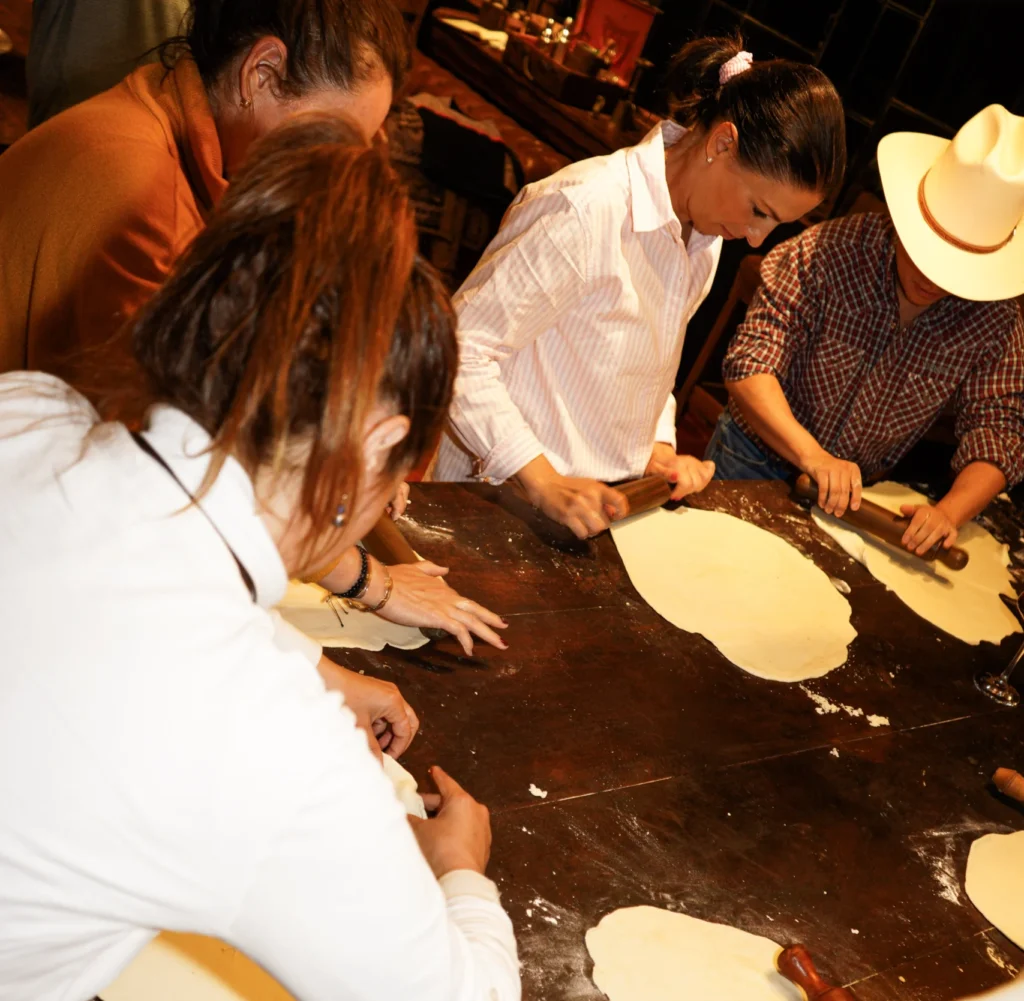
Today, when we hold our empanada cooking classes at Estancia Don Joaquín, I teach our guests in exactly the same way.
I go from person to person, showing them how to work the dough and how to make the repulgue, just as my grandmother once did with me.
Every time I do it, I can still feel the happiness I felt as that little girl wearing an apron and cooking beside her.
Traditional Argentine Empanadas — With a Don Joaquín Twist
Whenever my grandmother made empanadas, it felt like a celebration.
Her family came from Spain, and her empanadas included raisins.
I must confess that this is one family tradition I did not preserve.
As a child, I would carefully pick every raisin out of my empanada.
So, over the years, I created my own version of her recipe.
The filling may have evolved, but two things have remained untouched: her dough and her way of making the repulgue.
The Ingredients That Make Our Empanadas Special
At Estancia Don Joaquín, our empanadas are made with beef cut by hand rather than minced, together with onion, egg, carrot and traditional seasonings including cumin, paprika, pepper, oregano and a little parsley.
There is one small Don Joaquín secret, however, and that you will have to wait to discover when you visit the estancia.
Depending on the occasion, our empanadas may be baked in a conventional oven, cooked in our wood-fired oven or fried.
Each method brings something different to the flavour and texture, but all are part of our Argentine cooking traditions.
Why We Teach Empanada Dough From Scratch
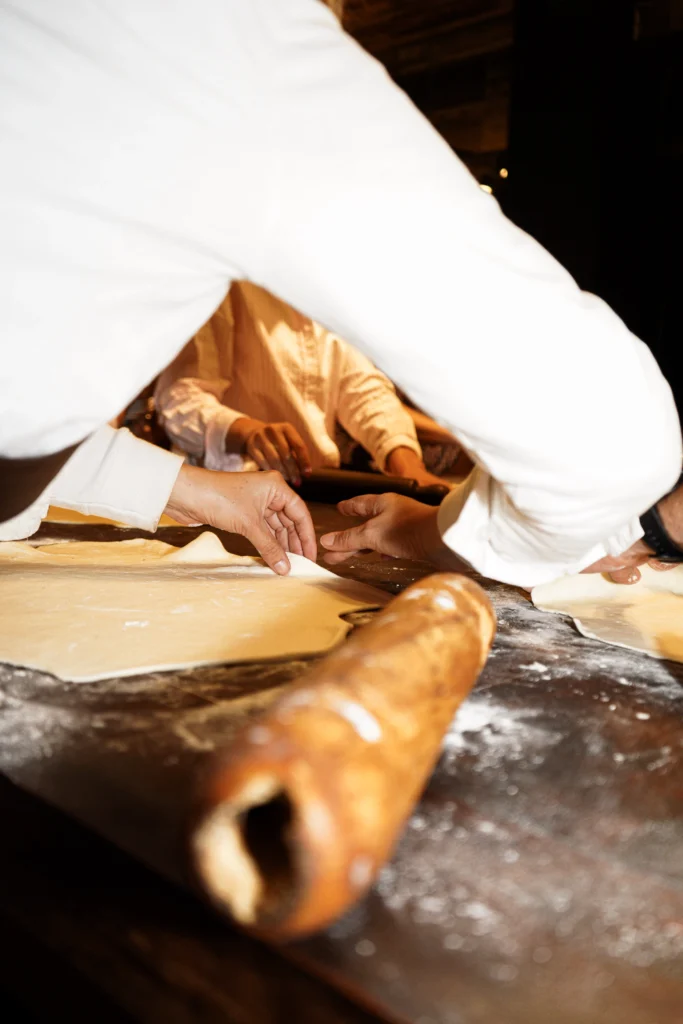
One of the things that makes our empanada class different is that our guests make the dough themselves, completely from scratch.
In Argentina, we can easily buy very good ready-made empanada pastry discs, or tapas.
For that reason, many cooking classes concentrate on preparing the filling, assembling the empanadas and learning the repulgue.
I wanted to do something different.
Most of our guests come from other countries, where Argentine empanada pastry may not be so easy to find.
If I only taught them how to prepare the filling, something important would be missing when they returned home.
So I teach them my grandmother’s dough.
I want our guests to be able to return to England, Australia, the United States or wherever home may be, open their kitchen cupboard and make the entire empanada themselves.
That way, it becomes more than a recipe learned on holiday.
It becomes something they can share.
Cooking Together in My Home at Estancia Don Joaquín
Our empanada class doesn’t take place in a professional demonstration kitchen.
It happens in the living room of my home at Estancia Don Joaquín, with wine on hand and a fire burning nearby.
There is music, conversation and plenty of laughter.
It is far more than just a cooking class.
Learning the Art of the Repulgue
Guests prepare the dough with their own hands, learn to fill their empanadas and then discover the art of making the repulgue.
There are a few other things that happen during our cooking class that I will refrain from explaining now.
Some traditions — and some surprises — are better experienced than described.
The class is designed to create connections between people.
Often our guests have arrived at the estancia from completely different countries and do not know one another before their stay.
Then suddenly they are standing around a fire together, flour on their hands, comparing empanadas, talking and making memories together.
For me, that is when the magic happens.
How to Make Traditional Argentine Beef Empanadas: Our Family Recipe
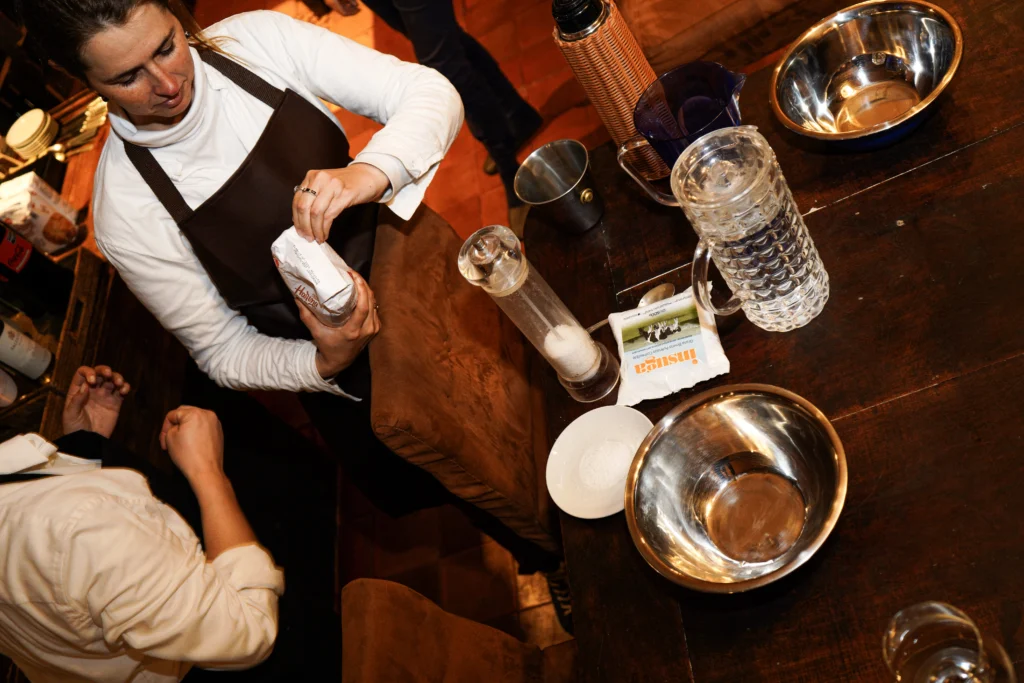
If you would like to try making Argentine empanadas at home, here is the recipe we share with our guests.
The secret is taking your time, preparing the dough by hand and enjoying the process. Empanadas were always something we made together in my family, and I think they taste even better when prepared that way.
Ingredients for Homemade Empanada Dough
- 1 kg (2.2 lbs) of refined wheat flour (Argentine type 000 or all-purpose flour)
- 70 g (2.5 oz) of beef fat (beef tallow)
- Approximately 450–500 ml of warm water, as needed
- Salt, to taste
How to Prepare Argentine Empanada Dough
Step 1 — Prepare the flour
Place the flour on a clean work surface or in a large bowl. Make a well in the centre.
Step 2 — Melt the beef fat
Gently melt the beef fat in a small saucepan over low heat.
Step 3 — Mix the ingredients
Dissolve the salt in the warm water. Pour the melted beef fat into the flour and gradually add the salted water, mixing everything together with your hands.
Step 4 — Knead the dough
Knead the dough for approximately 10 minutes until it becomes smooth, soft and elastic.
Step 5 — Let the dough rest
Cover the dough with a clean kitchen towel and allow it to rest for 30 minutes at room temperature.
Step 6 — Roll and cut the dough
Roll out the dough on a lightly floured surface until approximately 2 mm thick.
Cut into circles about 12–14 cm (approximately 5 inches) in diameter.
These circles are the traditional tapas de empanada, ready to be filled.
Ingredients for the Argentine Beef Empanada Filling
- 1 kg (2.2 lbs) of beef tenderloin (lomo), finely chopped by hand with a knife
- 3 large onions, finely chopped
- Red bell peppers, finely chopped
- Grated carrots
- Paprika, to taste
- Dried oregano, to taste
- Ground cumin, to taste
- Salt and black pepper, to taste
- Beef fat or oil for cooking
How to Prepare the Beef Filling
Step 1 — Sauté the onions
Heat a little beef fat or oil in a large pan over medium heat. Add the finely chopped onions and sauté until soft and translucent.
Step 2 — Add the beef
Cut the beef tenderloin into very small cubes using a sharp knife.
Add the meat to the onions and cook gently, stirring occasionally.
Traditionally, we chop the beef by hand rather than using ground beef. This gives our empanadas their wonderful homemade texture.
Step 3 — Add the vegetables
Add the grated carrots and finely chopped red bell peppers.
Stir everything together and continue cooking until the vegetables soften.
Step 4 — Add the spices
Season with paprika, oregano, ground cumin, salt and black pepper.
Mix well to combine all the flavours.
Step 5 — Cook slowly
Continue cooking over medium-low heat until the beef is cooked through and the vegetables are tender.
The filling should remain moist and juicy.
Step 6 — Let the filling cool
Remove from the heat and allow the filling to cool completely before assembling the empanadas.
How to Assemble Argentine Empanadas
Once your dough and filling are ready, it is time to put everything together.
- Place a generous spoonful of beef filling in the centre of each dough circle.
- Lightly moisten the edges with water.
- Fold the dough in half to form a semicircle.
- Press the edges together to seal.
- Finish with the traditional Argentine repulgue, the beautiful hand-folded edge that seals the empanada.
Every family has its own way of making the repulgue, and learning this technique is one of the most enjoyable parts of our cooking classes.
I still teach it the same way my grandmother taught me, patiently showing each person how to make the folds with their hands.
How to Cook Argentine Empanadas
There are several traditional ways of cooking Argentine empanadas, and each produces a slightly different result.
Oven-baked empanadas
Preheat the oven to 220°C (425°F).
Place the empanadas on a baking tray and bake for approximately 15–20 minutes, or until golden brown.
Fried empanadas
Heat beef fat or vegetable oil in a deep pan to approximately 175–180°C (350°F).
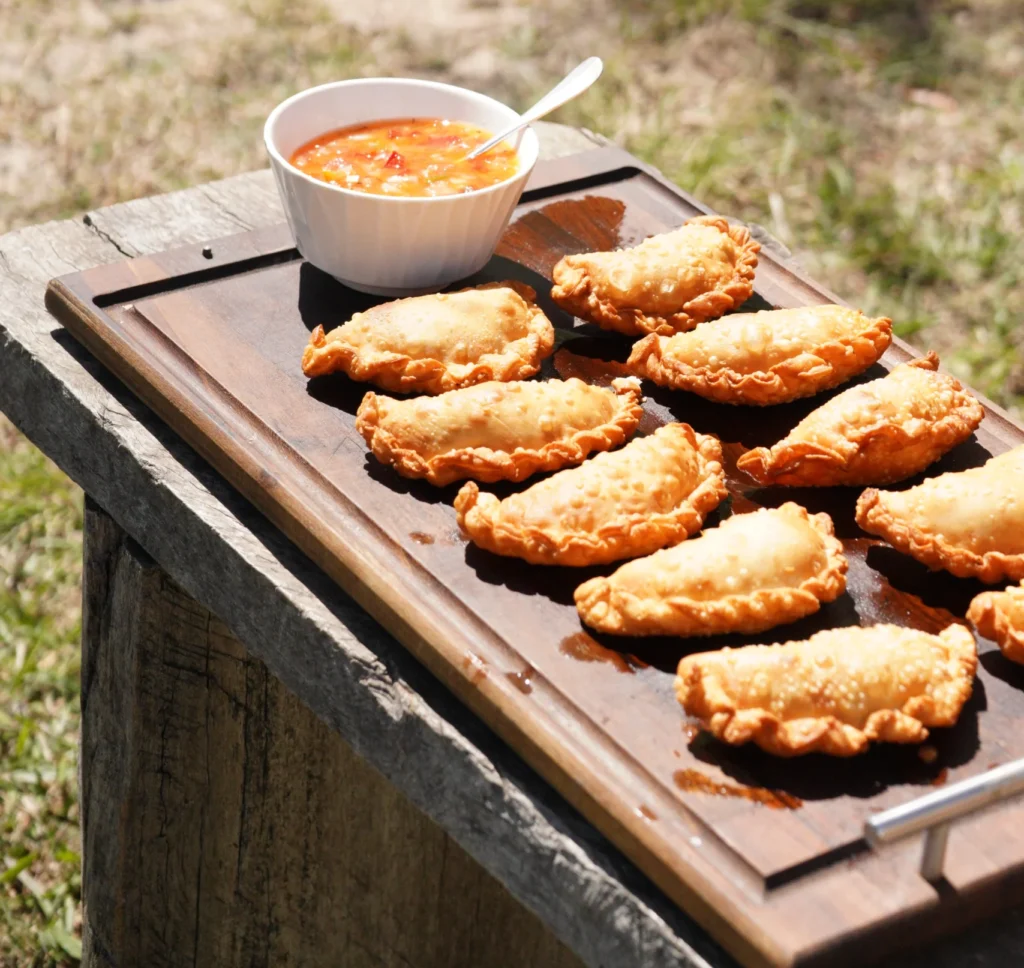
Fry the empanadas until golden and crispy on both sides.
Remove and drain on paper towels.
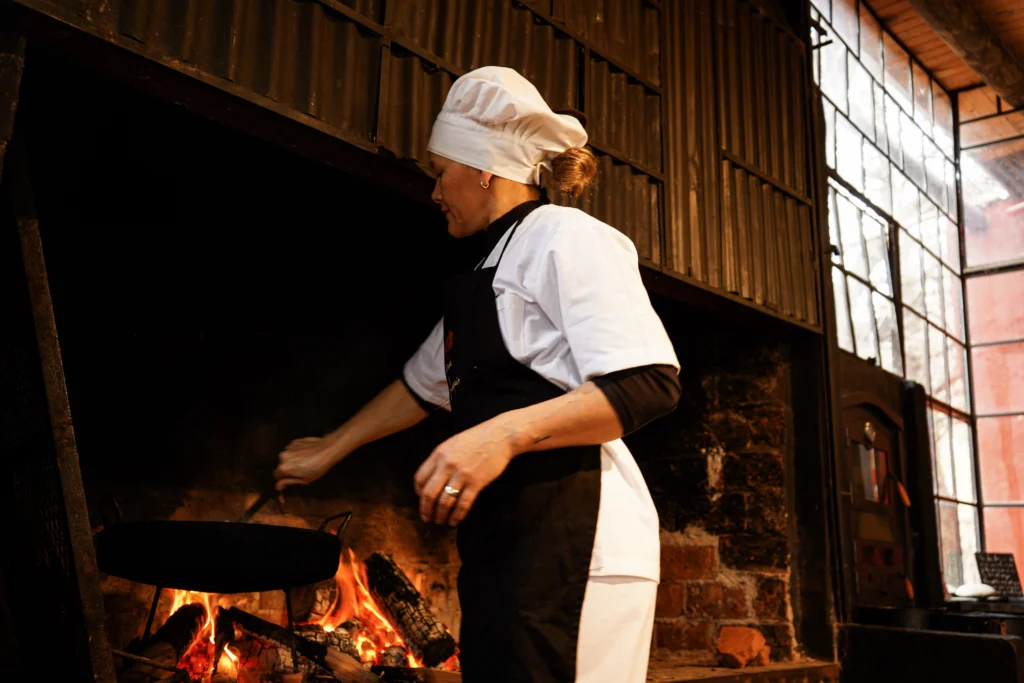
At Estancia Don Joaquín, we also love cooking empanadas in our wood-fired oven, where the fire adds another dimension to the experience.
Why Empanadas Are an Important Part of Argentine Culture
The history of the empanada stretches far beyond Argentina.
The tradition came to the Americas through Spain, with older culinary roots connected to the Arab influence on the Iberian Peninsula.
Over the centuries, the empanada became deeply Argentine.
Different regions developed their own recipes, ingredients and ways of preparing them.
Today, empanadas are part of our family gatherings, celebrations and everyday life.
A Food That Brings People Together
For me, the empanada brings people together.
It is wonderfully informal.
You can eat an empanada sitting at a table, standing beside a fire or talking with friends.
You don’t need an elaborate meal or a formal table setting.
You don’t even need many plates, which certainly makes washing up easier.
You simply need people.
This may be one reason empanadas have remained such an important part of our culture.
They allow us to stop thinking about everything else for a little while, laugh, eat and enjoy being together.
This, in itself, is the spirit of Estancia Don Joaquín.
Taking a Little Piece of Corrientes Home
One of my favourite parts of the experience often happens long after our guests have left Estancia Don Joaquín.
Again and again, former guests send me pictures of empanadas they have made in their own kitchens using the recipe they learned here.
And that always brings me great joy.
Some tell me that they have organised an entire Argentine night for their family or friends.
They prepare recipes they learned at the estancia, open a bottle of Argentine wine, show photographs from their journey and tell stories about their time in Corrientes.
I love that.
It tells me that in some small, or perhaps not so small, way, they have taken a little piece of Corrientes and Argentina home with them.
A recipe that my grandmother once taught a six-year-old girl at her marble table has travelled across the world and arrived at another family’s table.
Perhaps someone there will learn to make it too.
And the knowledge, the joy and the experience will continue to be shared.
More Than an Argentine Cooking Class
When people ask me what our empanada cooking class is really about, my answer is very simple.
It is about sharing.
It is about being present.
It is about passing on something that was once passed on to me.
We live in a time when simply being together — truly being together — can sometimes feel like a rare luxury.
When I put on an apron and share my grandmother’s recipe with our guests, I remember the joy I felt when she put an apron on me and shared her cooking all those years ago.
The dough is still her dough.
The repulgue is still the one her hands taught mine.
The difference is that now, there are many more hands around the table.
And that brings me a new kind of happiness.
Being together, learning, sharing and creating something with our hands is, for me, what cooking at Estancia Don Joaquín is all about.
I look forward to welcoming you to the estancia and sharing the joy of making traditional Argentine empanadas together.